Featured Solutions Y Strainer Simplex Basket Strainer Duplex Strainer Tee Strainer Automatic Strainer Conical Strainer Suction Diffuser Wafer Strainer Accessories Company Resources Contact us
Custom-Engineered Strainer Solutions
Solution 08

Custom-Engineered
Strainer Solutions

When the piping, the process or the specification will not accept a standard configuration.

Starts From
Your constraint
Construction
Fabricated
Common Drivers
Layout & spec
Output
GA for approval
02 — Overview

When standard will not fit

Most straining duties are met by a standard configuration in an appropriate size, class and material. Some are not — because the space envelope will not take a standard body, because the nozzles have to sit at an angle the piping dictates, because the fluid needs heating to stay pumpable, or because a project specification imposes requirements a catalogue item does not address.

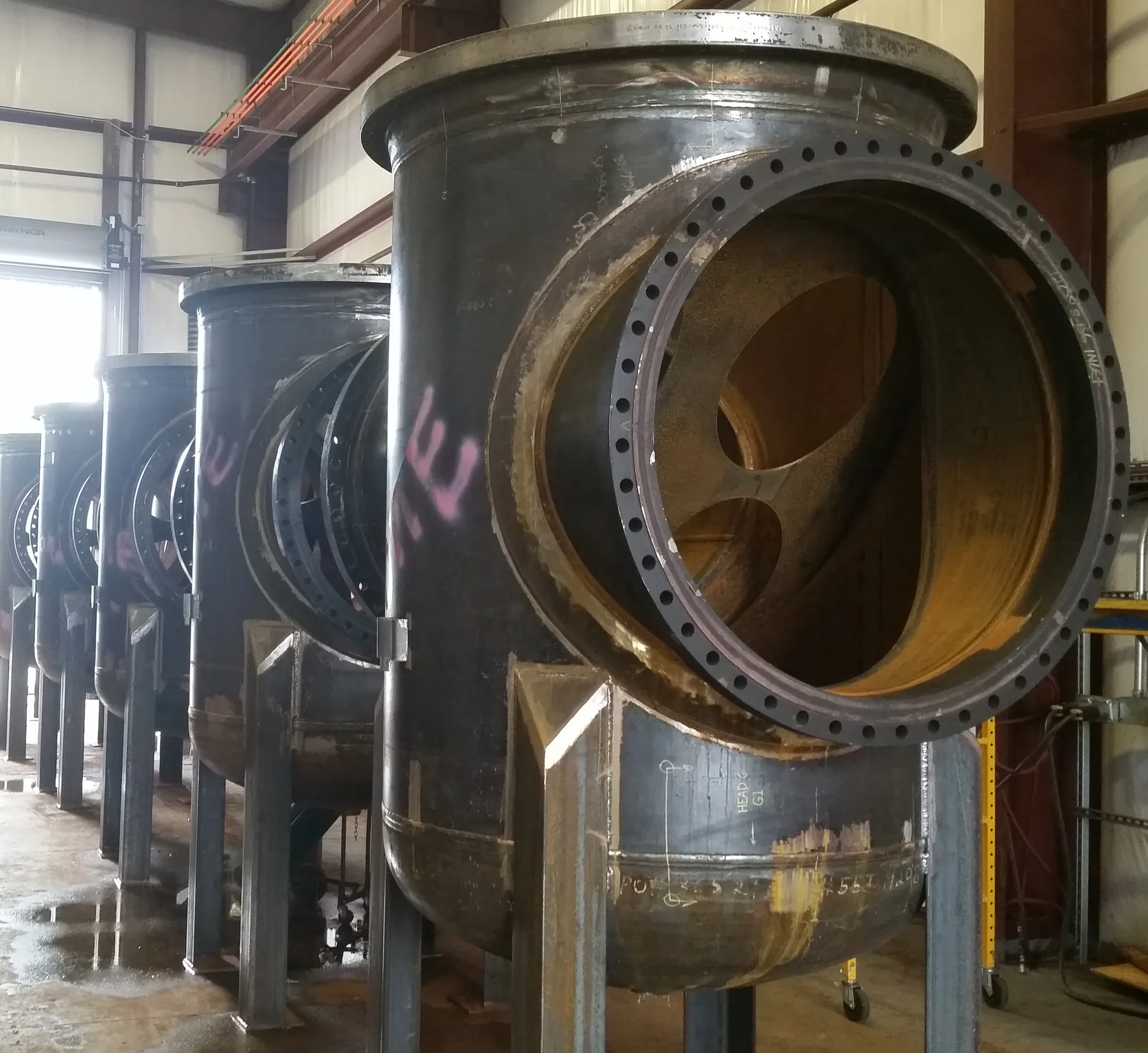
In those cases the strainer is engineered around the constraint. Because Hydrotherms manufactures fabricated strainers in-house, the body geometry, nozzle arrangement, screen configuration and mounting can all be set by the application rather than by a standard pattern.

03 — The Engineering Challenge

What usually drives a custom design

01 / Layout

Space & Geometry

A fixed space envelope, an awkward elevation, or nozzles that have to be offset or rotated to suit existing piping — constraints a standard body simply cannot accommodate.

02 / Process

Fluid Behaviour

Highly viscous fluids that need steam jacketing to stay pumpable, entrained air that has to be removed, or solids loading that demands a larger or different screen arrangement.

03 / Specification

Project Requirements

Client specifications imposing particular testing, certification, coating systems, code stamping or documentation that go beyond a standard supply.

04 — Our Engineering Solution

Engineered around the constraint

The starting point is the constraint itself — the envelope, the elevation, the fluid behaviour or the specification clause — and the strainer is configured to satisfy it while still meeting the hydraulic and filtration requirement. Options in regular use include offset and rotated nozzles, steam jacketing for viscous fluids, quick-opening and davit-assisted closures, multiple basket arrangements, pleated and wedge-wire elements, magnetic inserts, air and vapour eliminators, and skid or support-leg mounting.

Screens can be supplied in perforations from 1/32″ to 1/2″ and meshes from 20 through to 400, in upgraded materials including Monel and Hastelloy C where the service requires it. Fabrication is carried out with welding to ASME IX and NDE to code requirements, with the full range of testing and EN 10204 certification available. Where the project calls for it, a general arrangement drawing is issued for approval before manufacture.
05 — How We Engineer the Solution

The selection sequence

Six governing inputs, one evaluation, four engineered outputs. A custom design starts from the constraint that rules out the standard option, then works back to the hydraulics.

PROCESS INPUTSEVALUATIONENGINEERED OUTPUTThe governing constraintFlow rate & line sizeFluid & serviceSpace envelopeFiltration requirementSpecification & codesCUSTOMDESIGNBody geometry & nozzlesScreen & element designSpecial featuresGA drawing for approval

The constraint is treated as the primary input. Everything else is engineered to satisfy it without compromising the filtration or hydraulic requirement.

06 — Strainer Selection

Which configuration fits?

RequirementPossible Solution
Restricted space envelope or awkward geometryFabricated body with offset / rotated nozzles
Highly viscous fluidSteam jacketed strainer
Very high dirt-holding requirementMultiple basket arrangement or pleated elements
Project-specific testing, coating or documentationSpecification-driven fabricated design

A custom design is not automatically the right answer. Where a standard configuration meets the duty it will be quicker and more economical — we will say so rather than engineer something unnecessary.

07 — Design Parameters

What we need to size it

For a custom design, the constraint matters as much as the process data. Tell us what rules out the standard option.

Fluid / Service
Process medium
Line Size
Nominal bore
Flow Rate
Design / normal
Operating & Design Pressure
Barg / psig
Operating & Design Temperature
°C / °F
Allowable Pressure Drop
Across strainer
Required Filtration Rating
Mesh / perforation / micron
Material Requirement
Fluid compatibility
End Connection
FLG / BW / SW / SCR
Installation Orientation
Piping layout
Drain / Vent Requirement
Chamber drain-down
Maintenance Philosophy
Access & downtime
Governing Constraint
What rules out standard
Space Envelope
Dimensional limits
08 — Typical Applications

Where this is used

Retrofit into existing pipingModular skid packagesViscous and heated fluid serviceSpace-constrained plant roomsSpecification-driven EPC projectsNon-standard nozzle geometry

What this achieves

Body geometry and nozzles set by the piping, not by a standard pattern
Screen and element configuration matched to the actual duty
Special features integrated into the design rather than bolted on
Testing, certification and documentation to the project specification
General arrangement drawing issued for approval before manufacture
10 — Materials & Installation

Selected for the application

Fabricated construction in carbon steel, low-temperature carbon steel, alloy steel, stainless steel, duplex and super duplex, and nickel alloys including Monel, Inconel and Hastelloy. Screens in perforations from 1/32″ to 1/2″ and meshes from 20 to 400, with upgraded basket materials, special gaskets and seals, and special coatings or linings available.

Working from your drawings

Where a strainer is being engineered into existing piping, send the layout drawing or the dimensional constraint along with the process data. A general arrangement drawing is issued for approval before manufacture so the interfaces, nozzle orientation, access clearance and support arrangement are agreed before anything is fabricated.

11 — FAQ

Common selection questions

Anything where the geometry, connections, screen arrangement or features are set by the application rather than by a standard configuration — offset nozzles, steam jacketing, multiple baskets, skid mounting, non-standard end connections, or specification-driven testing and documentation.

It involves an engineering and approval step that a standard item does not, so it should be raised early in the project. Where a standard configuration meets the duty, we will recommend it instead.

Yes. Send the specification, datasheet or piping drawing and we will review it against what we can supply, and identify anything that needs clarification before we quote.

Yes. A general arrangement drawing is issued for approval before manufacture where the project requires it, so nozzle orientation, dimensions, access clearance and support arrangement are agreed in advance.

Steam jacketing for viscous fluids, offset or rotated nozzles, quick-opening and davit-assisted covers, magnetic inserts, air and vapour eliminators, pleated and wedge-wire elements, multiple basket arrangements, zinc anodes, special coatings and skid mounting.

13 — Technical Enquiry

Request engineering assistance